
Enon Missionary Baptist Church
An overview of the historic significance of the Enon Missionary Baptist Church and its effect on the local community around it.
RELIGION & CHURCHES
Enon Missionary Baptist Church: A Rural Congregation Rooted in Faith, Land, and Community
In the rolling countryside of Macon County, Tennessee, churches have long stood as more than places of worship. They were gathering points, record keepers, social anchors, and spiritual homes for generations of families. Among these enduring institutions is Enon Missionary Baptist Church, a congregation whose history reflects the broader story of rural Middle Tennessee—its settlement, its faith traditions, and its community bonds.
Though modest in scale, Enon Missionary Baptist Church represents a deep and enduring presence in the local landscape, one shaped by the rhythms of farm life, the convictions of Baptist belief, and the shared experiences of neighbors bound together by geography and faith.
Early Foundations in a Rural Landscape
The roots of Enon Missionary Baptist Church reach back to the mid-19th century, a period when Macon County was still developing as an agricultural region. During this era, churches were often established not by large denominations or formal planning committees, but by small groups of families who desired regular worship closer to home.
Travel in rural Tennessee was slow and difficult, especially before the widespread improvement of roads. As a result, communities frequently organized churches within walking or horseback distance. These congregations often met initially in homes, brush arbors, or simple log structures before constructing permanent buildings.
The name “Enon”, drawn from John 3:23—“And John also was baptizing in Aenon near to Salim, because there was much water there”—was a common and meaningful choice for Baptist congregations. It reflected both theological emphasis on baptism by immersion and the practical reality of rural life, where creeks and springs served as baptismal sites long before indoor baptistries became common.
Missionary Baptist Identity
Enon’s identity as a Missionary Baptist Church places it firmly within a major movement of Southern Baptist life that emerged during the 19th century. Missionary Baptists distinguished themselves by supporting organized missionary efforts, evangelism, and cooperative association work—while still maintaining local church autonomy.
In rural Tennessee, Missionary Baptist churches were typically:
Congregationally governed
Doctrinally conservative
Strongly community-oriented
Connected to regional Baptist associations for fellowship and support
For churches like Enon, association meetings were major annual events, often lasting several days and bringing together churches from across the county or region. These gatherings reinforced shared doctrine, allowed churches to exchange ministers, and strengthened bonds among rural congregations.
The Church Building as a Community Landmark
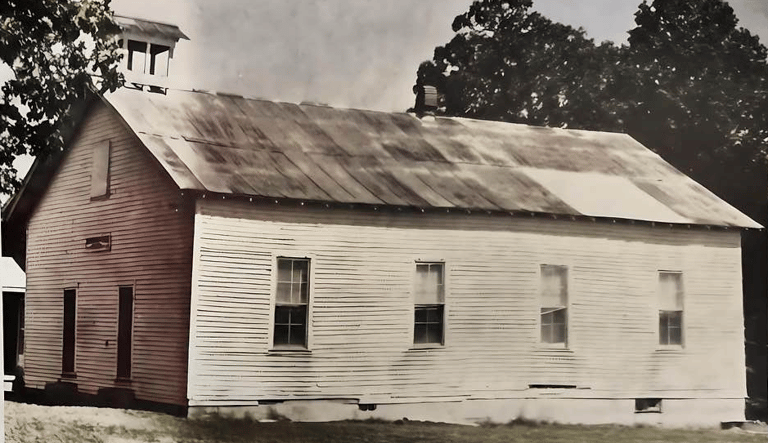
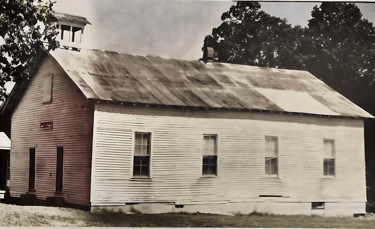
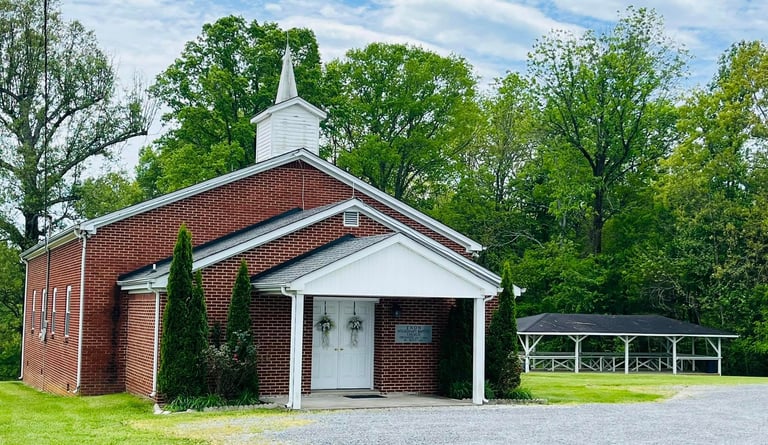
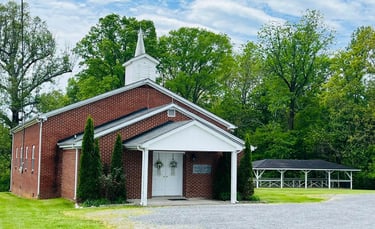
While specific construction dates and building details for Enon Missionary Baptist Church are not widely published, its physical presence—like many rural churches—would have evolved over time.
Early buildings were typically:
Wood-frame or log construction
Heated by wood stoves
Lit by windows and later kerosene lamps
Furnished with handmade pews
As decades passed, improvements were often made incrementally:
Replacement of original structures
Addition of Sunday school rooms
Installation of electricity and modern heating
Construction of fellowship halls or covered entrances
The church grounds themselves often became sacred spaces beyond the building. Adjacent cemeteries, common in rural congregations, served as places where generations of families were laid to rest—creating a tangible link between past and present worshippers.
Worship, Revival, and Daily Life
For much of its history, Enon Missionary Baptist Church would have followed the rhythms familiar to rural Baptist congregations:
Sunday worship services, often held once or twice monthly in earlier years
Sunday school, emphasizing Bible literacy for children and adults
Revival meetings, frequently held in late summer or early fall
Baptisms in nearby creeks or rivers
Community dinners, singings, and fellowship gatherings
These events were not merely religious observances—they were social lifelines. In isolated rural areas, the church was where people exchanged news, formed friendships, courted future spouses, and supported one another through hardship.
Through War, Depression, and Change
Like all long-standing Southern churches, Enon Missionary Baptist would have weathered profound historical changes:
The Civil War and Reconstruction: Congregations across Tennessee experienced hardship during and after the war, including loss of members, economic strain, and social upheaval. Churches often became places of solace and stability in uncertain times.
The Great Depression: During the 1930s, rural churches relied heavily on mutual aid. Offerings were small, but commitment was strong. Faith communities often functioned as informal support systems when money was scarce.
Mid-20th Century Transitions: As public schools consolidated and rural populations shifted, churches like Enon remained anchors of continuity. Even as families moved away, many returned for homecomings, funerals, and special services.
Continuity Across Generations
One of the most significant aspects of Enon Missionary Baptist Church’s history is continuity. Rural churches often maintain identity not through size or publicity, but through generational loyalty.
Family names recur in:
Membership rolls
Cemetery markers
Church minutes
Oral histories
Grandparents, parents, and children worshiping in the same space creates a sense of belonging that transcends time. In this way, Enon is not simply a church—it is a repository of collective memory.
Historical Significance Today
While Enon Missionary Baptist Church may not appear prominently in statewide historic registers or major publications, its historical importance lies in something equally valuable:
It represents grassroots religious life in rural Tennessee.
It illustrates how faith shaped community identity.
It preserves traditions that modern life often overlooks.
Churches like Enon are essential to understanding local history, because they document everyday lives—ordinary people whose stories might otherwise go unrecorded.
Why Enon’s History Matters
The story of Enon Missionary Baptist Church mirrors that of countless rural churches across the South, yet it is also deeply specific to Macon County and the Lafayette area. Its endurance speaks to the strength of community ties, shared beliefs, and a commitment to place.
In remembering Enon, we are reminded that history is not only found in courthouses and monuments—but also in small churches along country roads, where faith, family, and fellowship quietly shaped generations.
Written By: Caleb Fleming, MCHPP President
© 2026 | Macon History Project