Galen Elementary School
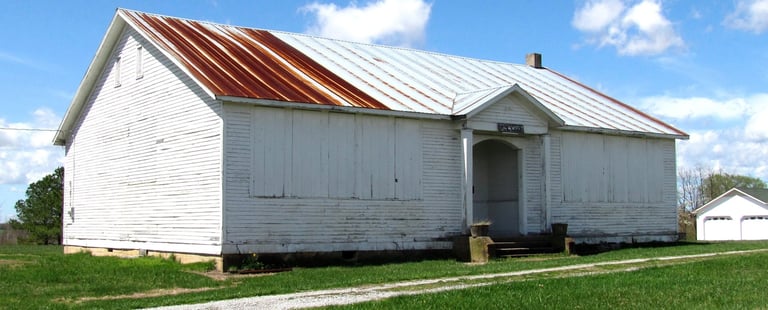
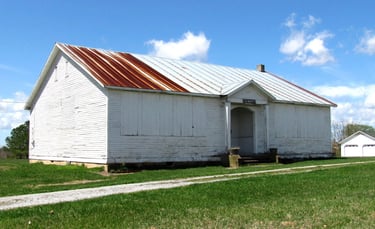
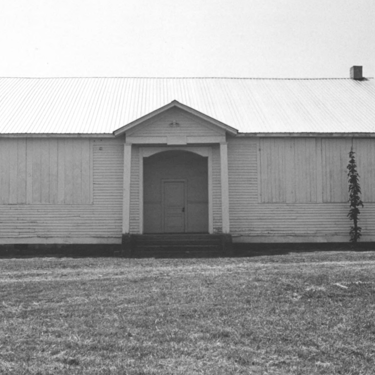
A dive into the historic Galen Elementary School located on Hwy 261 (Galen Rd.) in Macon County, Tennessee. A prominent area served by one of the few remaining old country school structures.
EDUCATION & SCHOOLS
On a quiet stretch of road in rural Macon County, Tennessee, stands a modest schoolhouse known to generations simply as Galen. For decades, the building echoed with children’s voices, the scrape of wooden desks across pine floors, and the steady cadence of lessons recited aloud. Though often remembered as a “one-room schoolhouse,” Galen Elementary was something slightly larger—and more ambitious—than that familiar image. It was a country school shaped by a changing era, built at the intersection of tradition and reform, and sustained by a close-knit farming community that believed deeply in education.
Galen Elementary was more than a place of instruction. It was a gathering point, a symbol of progress, and for many families, the center of daily life. Its story reflects the broader history of rural education in Tennessee during the early twentieth century, when communities transitioned from scattered one-room schools to standardized, state-planned facilities that promised better lighting, sanitation, and opportunity.
Education in Rural Macon County
Before Galen Elementary was built, education in the Galen community followed a pattern common throughout rural Tennessee. Small one-room schools dotted the countryside, often constructed of wood and maintained by local families. These schools typically served all grades together, from the youngest beginners to older students preparing to leave school for farm work or trades. A single teacher managed instruction, discipline, and maintenance, teaching reading, arithmetic, penmanship, geography, and history to students of widely varying ages.
Attendance followed the rhythms of agriculture. Children were needed at home during planting and harvest seasons, and schooling often paused or thinned during those months. Despite limited resources, these schools represented the community’s commitment to learning and self-improvement.
By the early 1900s, however, reformers and state officials began advocating for changes. Tennessee, like many states, recognized that rural schools lagged behind urban ones in facilities, length of school terms, and educational outcomes. The state began promoting standardized school plans, improved sanitation, graded classrooms, and trained teachers. These reforms aimed to modernize rural education while still keeping schools close to the communities they served.
It was within this environment that Galen Elementary came into being.
Building a Modern Country School
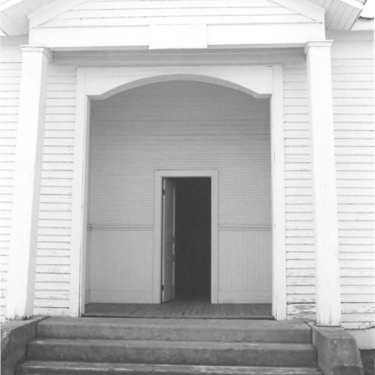
Construction of Galen Elementary began in 1928, during a period of optimism just before the Great Depression reshaped rural America. The school was built using a Tennessee state school plan, a design promoted by the state Department of Education to bring uniformity and higher standards to rural schools.
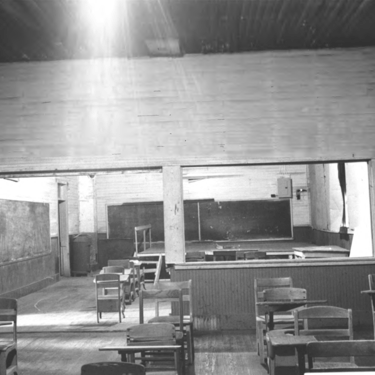
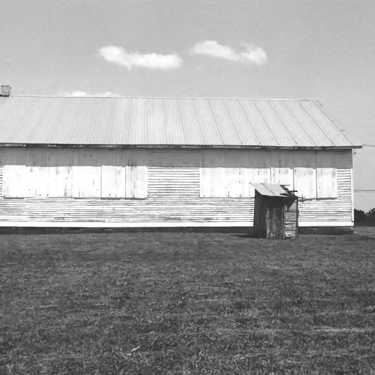
Unlike the earlier one-room schools it replaced, Galen was a larger structure with multiple classrooms, large windows, and a thoughtful layout. The building was constructed by local builder Jimmy Bohanon, using materials and labor drawn largely from the surrounding area.
The design emphasized natural light, with tall windows lining the classrooms so students could read and write without strain. At a time when electricity was not universal in rural Macon County, sunlight was essential. The interior spaces were arranged to allow for graded instruction, separating younger students from older ones and making teaching more efficient.
When Galen Elementary opened in August 1929, it represented a clear step forward for the community. Parents saw it as evidence that their children could receive an education comparable—at least in quality if not in scale—to that offered in towns and cities.
A School with Big Aspirations
Though it ultimately functioned primarily as an elementary school, Galen was originally envisioned as something more. Plans called for it to serve as a feeder school, offering instruction through the early high school grades. At various times, students attended classes beyond the elementary level, though the school never operated as a full four-year high school with graduating classes.
Even so, the presence of upper-grade instruction reflected the community’s aspirations. Families wanted their children to continue their education without traveling long distances, and Galen provided that opportunity—at least for a time.
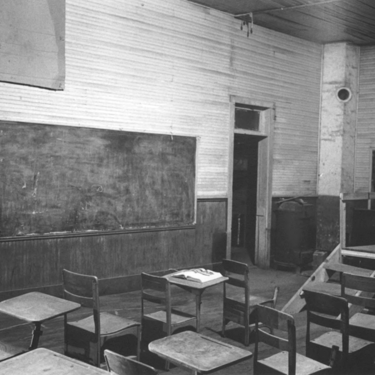
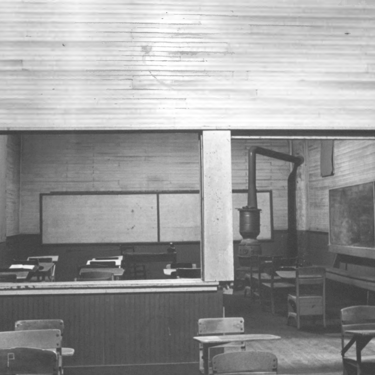
Inside the school, classrooms were orderly and purposeful. Wooden desks faced chalkboards that bore the marks of countless lessons. Teachers relied on textbooks approved by the state, but much instruction still depended on recitation, memorization, and careful penmanship. Students learned arithmetic by working problems aloud, history by repeating dates and events, and reading by taking turns standing at their desks.
Discipline was firm but familiar. Teachers were respected authority figures, often drawn from the region and known personally to the families they served. Many boarded with local families during the school term, further weaving the school into the fabric of community life.
Daily Life at Galen
A typical school day at Galen began early. Children arrived on foot, on horseback, or later by bus as transportation improved. In winter, coats were hung along the walls, and the school stove—tended carefully by older students or the teacher—provided warmth. The smell of coal or wood smoke mingled with chalk dust and oiled floors.
Lessons followed a structured schedule, but flexibility was essential. Teachers adapted instruction to students’ abilities, often grouping them by grade within the same classroom. Older students sometimes helped younger ones, reinforcing their own learning in the process.
Recess was an important part of the day. Children played games in the schoolyard, inventing their own entertainment with little more than open space and imagination. These moments fostered friendships that lasted well beyond school years.
For many students, Galen Elementary was their first sustained experience outside the home. The school taught not only academics but also social expectations—punctuality, cooperation, respect, and responsibility.
Health, Sanitation, and Progress
One of Galen Elementary’s most significant contributions to rural education in Macon County was its attention to health and sanitation. Earlier schools often relied on shared drinking cups and outdoor privies, practices that reformers increasingly criticized as unsanitary.
Galen featured improved facilities, including a hand-pump water system that allowed students to drink from a common spout rather than a shared dipper. While simple by modern standards, this system represented a meaningful advance in public health.
In 1941, Galen became the first rural school in Macon County to offer hot lunches. This innovation reflected growing awareness of child nutrition and its impact on learning. A portion of the building was adapted for food preparation, and students who once brought cold meals from home could now receive a warm lunch during the school day.
For many children, this meal was a highlight—and sometimes the most substantial food they received during the day. The lunch program strengthened the school’s role as a caretaker of the community’s children, not just their education.
The School and the Community
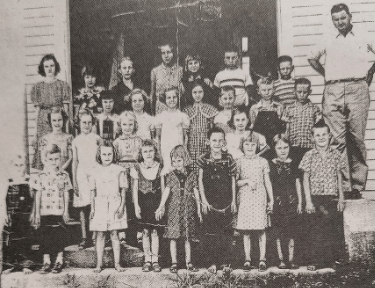
Galen Elementary belonged to the community as much as it did to the school system. Parents attended programs, exhibitions, and holiday performances. The school hosted Christmas plays, spelling bees, and end-of-term celebrations that drew families together.
During elections, the building served as a voting precinct, reinforcing its role as a civic center. Community meetings, club gatherings, and public discussions took place within its walls. Long after the last bell rang, Galen continued to serve as a space where neighbors gathered.
Teachers were often community leaders, and the school reinforced shared values. Education was seen not merely as preparation for employment but as a means of building good citizens—people capable of participating in civic life and contributing to the county’s future.
Change and Consolidation
By the late 1940s and 1950s, the forces reshaping rural America began to reach Galen. Improved roads and bus transportation made it possible to transport students longer distances. Educational policy increasingly favored consolidation, arguing that larger schools could offer broader curricula, specialized teachers, and modern facilities.
Small rural schools across Tennessee closed one by one, their students reassigned to centralized campuses. Though these changes promised efficiency and expanded opportunity, they also marked the end of an era.
Galen Elementary closed in 1960, concluding more than thirty years of service. For many in the community, the closure was bittersweet. While students gained access to newer schools, something personal and familiar was lost.
Life After the Bell
After its closure, the Galen schoolhouse did not fall silent. The building continued to serve the community in new ways, hosting meetings, social events, and civic functions. Its sturdy construction and central location made it a natural gathering place.
Over time, the building came to be recognized not just as a former school, but as a historic resource—a tangible reminder of how rural education once looked and felt. In 1993, Galen Elementary was listed on the National Register of Historic Places, acknowledging its architectural integrity and historical significance.
This recognition ensured that the building would be preserved, not merely as an artifact, but as a story embodied in brick and mortar.
Remembering Galen
Today, Galen Elementary stands as a link between generations. Former students remember the school through personal stories: the teacher who encouraged them, the lesson that sparked curiosity, the friendships formed in its classrooms. For others, the building represents family history—parents, grandparents, or great-grandparents who passed through its doors.
Though often remembered as a “one-room schoolhouse,” Galen was part of the transition away from that model. It carried forward the intimacy and community spirit of earlier schools while embracing new ideas about structure, health, and education.
Its story is not unique, but it is deeply local. Galen reflects the values of Macon County—hard work, self-reliance, and belief in the importance of education. It reminds us that progress does not always arrive in grand gestures; sometimes it comes in the form of larger windows, a hot lunch, or a brick school built by neighbors for their children.
A Lasting Legacy
Galen Elementary School remains a symbol of a time when education was woven directly into the daily life of the community. It stands as a testament to the belief that even in the most rural places, learning mattered—and that investing in children was worth the effort and expense.
Long after its classrooms fell quiet, Galen continues to teach. It teaches us about the evolution of rural education, the resilience of small communities, and the enduring power of shared purpose. In preserving its story, Macon County preserves a vital chapter of its own history—one written not just in records and registers, but in the memories of those who learned, taught, and gathered within its walls.
Written by: Caleb Fleming, Macon County History Preservation Project
© 2026 | Macon History Project