Macon County Singing Conventions
For decades, the sound of voices in harmony filled Lafayette’s town square as singing conventions brought together neighbors, families, and visitors from across Macon County. Rooted in faith and fellowship, these gatherings became a defining tradition—one that left a lasting mark on the cultural and musical heritage of the community.
CULTURE & DAILY LIFE
The Sounds That Gathered a Community: Singing Conventions in Lafayette, Tennessee
In the heart of Middle Tennessee, in the small but storied county seat of Lafayette, there once echoed a sound that defined the rhythm of community life—a sound born of faith, fellowship, and a shared love of music. On warm summer days and cool autumn evenings, the Macon County Singing Convention transformed Lafayette’s town square into a vibrant hub of song, drawing families, neighbors, and travelers alike to raise their voices in harmony. These conventions were far more than musical performances: they were social gatherings, spiritual revivals, and cultural landmarks that helped shape the identity of Macon County across generations.
While specific accounts from Harold G. Blankenship’s History of Macon County, Tennessee describe the county’s people, churches, and traditions from the 19th into the 20th century, the town’s singing conventions stand out as one of the area’s most cherished public events. Although Blankenship’s book itself is not fully available online, local records and historical accounts reference the long tradition of singing conventions and the enthusiastic crowds they drew to the Macon County courthouse square.
A Meeting of Voices: What Was a Singing Convention?
To understand the significance of the singing conventions in Lafayette, it helps to see them in the broader context of Southern music culture. Beginning in the late 19th century and flourishing into the early 20th century, county and regional singing conventions became a hallmark of community life in rural America, especially in the South. Rooted in shape-note and sacred music traditions, these gatherings brought together singers from churches, families, and neighboring counties for one to several days of non-competitive singing.
Unlike modern concerts where a professional group performs for an audience, singing conventions were participatory. Singers stood together—sometimes in courthouses, on courthouse lawns, or at outdoor pavilions—and sang from songbooks that used systems like shape-note notation to help people who couldn’t read standard music participate fully. These conventions were social events as much as musical ones: people brought picnic lunches, reunited with old friends, heard neighbors sing, and joined in what was at once worship, celebration, and community affirmation.
In Tennessee and neighboring states, singing conventions shaped a regional identity around shared values of faith and fellowship. County singing conventions often had organizational officers and multi-day programs, with everyone invited to join in the music.
The Birth and Growth of Singing in Macon County
Although History of Macon County, Tennessee by Harold G. Blankenship (a lifelong resident, school principal, and the county’s first official historian) covers a wide swath of county history, local accounts specifically note the remarkable story of the Macon County Singing Convention. This event began in the early 20th century—a period of burgeoning musical activity across rural Tennessee—and quickly became a beloved tradition.
According to community recollections and newspaper accounts, the convention was likely established around the 1910s, with some local group promotional material listing the founding date as 1915. These conventions were held annually, and for decades they transformed the county seat into a bustling center of song.
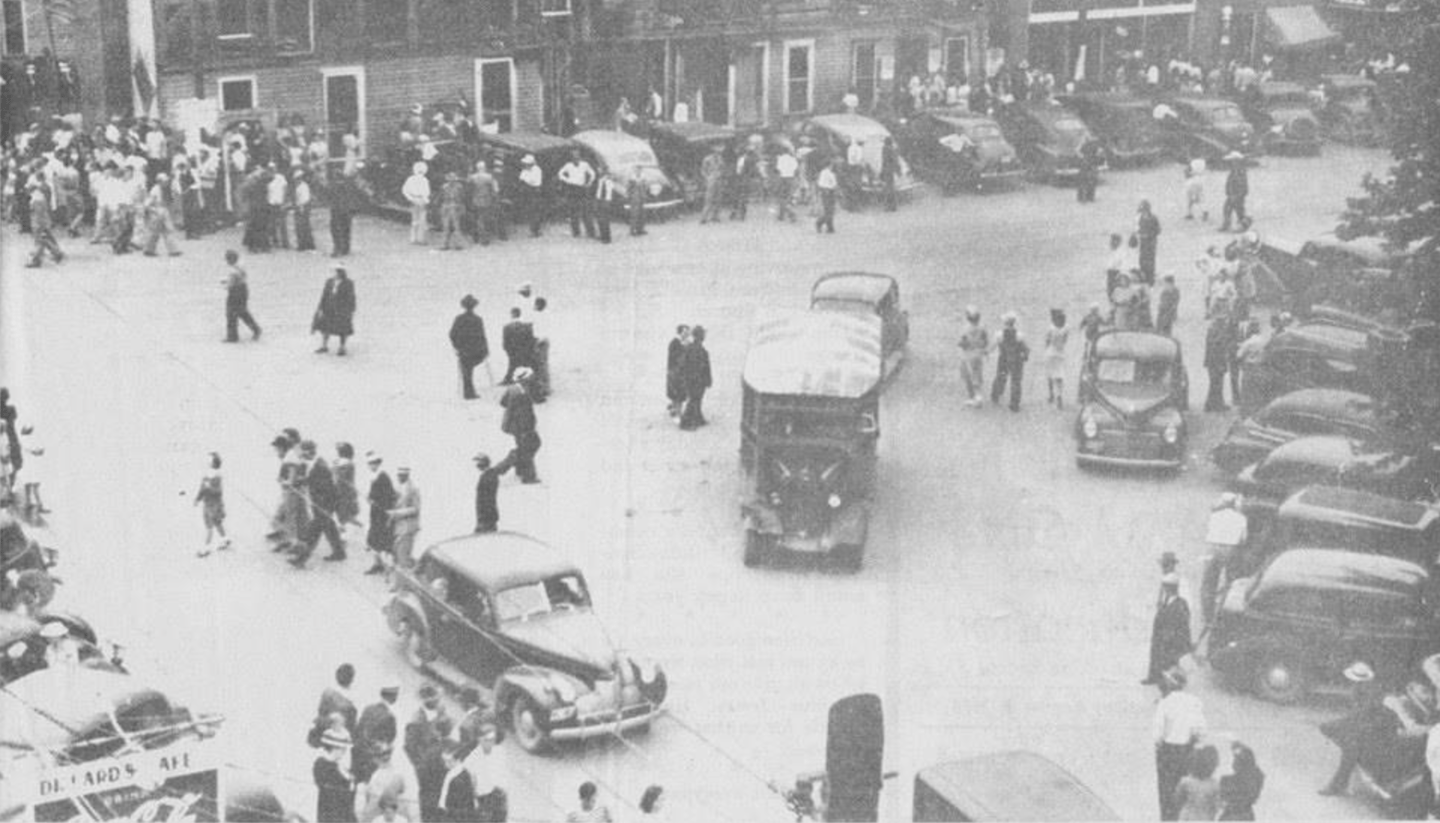
By the 1920s and 1930s, the singing convention was no small affair. One report from The Macon County Times in 1944 noted that the event “attracts thousands” to Lafayette, and observers recall that some years brought as many as 5,000 visitors to town for the singing and community fellowship.
At a time when Macon County was relatively isolated—lacking railroad access until highways became more established—such events were pivotal, not only for entertainment but for strengthening social bonds and affirming shared cultural values.
The Courthouse Square Comes Alive
What made the Macon County Singing Convention especially memorable to locals was its setting: the town square of Lafayette, with the historic Macon County Courthouse at its center.
For days at a time in peak years, singers and listeners filled the square, gathered under tents, on benches, on the courthouse steps, and perched on rooftops to hear the music and be part of the event. Some brought folding chairs; many brought their families; most brought a joyful spirit. Testimonies from community members—preserved in oral histories and social media recollections decades later—describe a vibrant scene of intergenerational participation, where older singers passed down favorite hymns to younger listeners and newcomers.
Local musicians and quartets—some regionally famous—joined the ranks of community voices. The conventions were not exclusively amateur: occasionally well-known groups appeared on the program, and visitors came from across the surrounding counties. Whether performing sacred quartet harmonies or leading large groups of local participants, singers and audiences alike propelled the conventions forward as living traditions.
The applications of singing conventions to broader social settings reveal how deeply music was tied to community. In other counties across Tennessee, singing conventions could be as much about fellowship and mutual support as about music itself. For example, a Camden Chronicle report from 1922 mentioned that singing conventions drew large crowds because “everyone got in the singing,” demonstrating how these gatherings were woven into the fabric of rural life.
Music, Religion, and Community Life
The singing conventions in Lafayette were rooted firmly in the region’s religious traditions. Gospel and shape-note singing sprang from a long history of devotional music in the South, where hymn singing was not only part of church life but also part of household gatherings, camp meetings, and seasonal celebrations. The Sacred Harp and other shape-note traditions emphasized communal participation—everyone sang, and everyone could take part, regardless of formal musical training.
This participatory ethos made singing conventions deeply meaningful. For many participants, singing was an act of worship—a way to express faith and emotional connection with their neighbors and with God. Hymns and gospel songs sung in close harmony had a distinct power: voices merging in the open air of the courthouse square stirred a sense of vertical and horizontal connection that few other forms of entertainment could match.
In a 1919 example from nearby Grainger County, such “all day singings” drew enormous crowds, who came not only to listen but to sing and reconnect with old friends.
The Golden Years: 1920s and 1930s
The heyday of singing conventions across the South, including Lafayette’s, coincided with broader growth in community musical culture. During the 1920s and 1930s, conventions regularly attracted crowds that reflected the social and spiritual vitality of rural life. In Macon County, reports from the period reference thousands of attendees and multiple days of singing, fellowship, and celebration.
These conventions typically featured multiple singing sessions each day, with local singers and visiting quartets taking the stage—or simply stepping forward amidst the crowd—to lead beloved hymns. Food stands, fellowship tents, and laughter filled the downtown square, creating an atmosphere that was part revival meeting, part festival, and all community gathering.
At a time before television and easy automobile travel, such events were major social highlights. Singing conventions offered people from disparate parts of the county—and beyond—a reason to come together, share stories, and renew friendships. The courthouse square, with its familiar backdrop, became a stage for these shared human experiences.
Challenges and Change
Despite their popularity, singing conventions began to change after World War II. Across Tennessee and the South, broader cultural transformations—such as increased mobility, the rise of radio and recorded music, and changing social habits—shifted how people engaged with music and community events. Many county conventions that once thrived on local participation saw attendance decline as professional radio quartets and national gospel events drew attention elsewhere.
In Macon County, too, the grand scale of the courthouse square conventions eventually receded. Attendance dropped compared to the peak decades of the early 20th century, and organizers began to hold conventions in churches or community spaces rather than centering everything on the town square.
Yet the legacy of those golden years remained strong in the memories of county residents. Stories of thousands gathering around the courthouse, of impromptu quartets forming in the shade of oak trees, and of children learning their first hymns on those steps carried on through generations.
Voices Across Time: Legacy and Memory
Today, the legacy of the Macon County Singing Convention lives on in the stories and recollections of those who attended, performed, or simply listened. Although the grand outdoor events on the courthouse square are not the central yearly tradition they once were, community singing continues in various forms—at churches, in homes, and at smaller conventions that honor the deep musical heritage of the region.
This legacy reflects not only a local festival but a broader regional tradition that once pulsed through rural Tennessee and throughout the Southern United States. The singing conventions of Lafayette were part of a culture where music served as a communal heartbeat, anchoring people in shared belief, identity, and fellowship.
From the shape-note fanfare of early traditions to the four-part harmonies echoing off courthouse walls, these conventions were embodiments of collective memory. Even as cultural tides changed, the songs remain in old hymnals, family recollections, and the reverent quiet of Sunday services.
Conclusion: A Harmonious Heritage
The story of singing conventions in Lafayette, Tennessee is more than a chapter of local history. It is a testament to how music can shape community, forge connections, and uplift spirits in ways that endure long after the last note fades. On the courthouse square and beyond, voices once rose together—neighbors, friends, and strangers—blending their lives into a shared melody.
Although History of Macon County, Tennessee by Harold G. Blankenship may not be widely digitized, local accounts and historical records make clear that these gatherings were monumental events in Macon County’s cultural life, drawing thousands and leaving an imprint on the social fabric of the region.
In celebrating these singing conventions, we honor the voices that helped shape a community—voices that sang not just for music’s sake but for fellowship, faith, and the shared joy of singing together.
Written by: Caleb Fleming, Macon County History Preservation Project
© 2026 | Macon History Project